

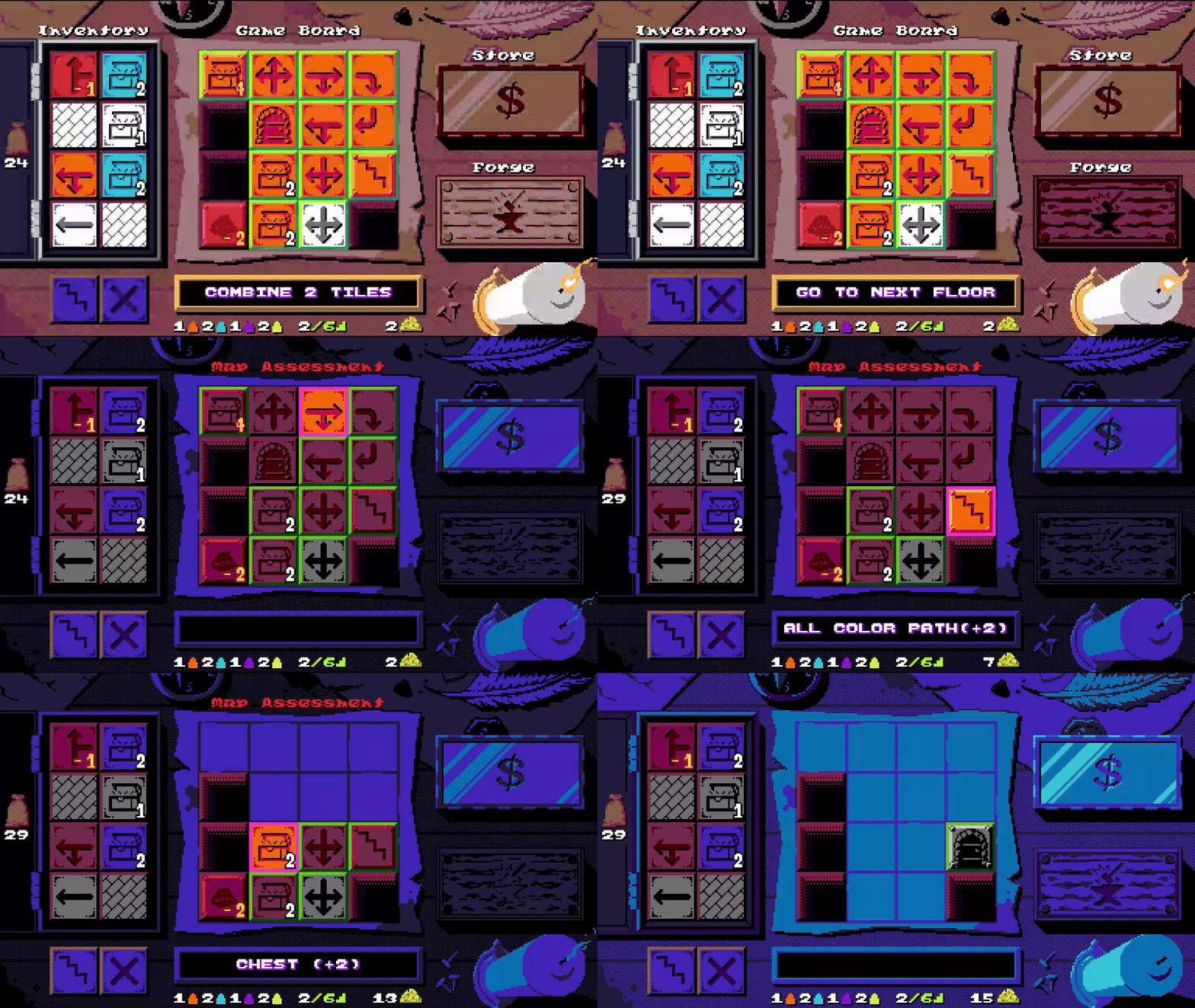
Dungeon Mapper is a single player puzzle game made in the style of a UFO 50 game.
OVERVIEW
-
Single Player Puzzle Game
-
Made in Godot
-
Inspired by UFO 50
SCREENSHOTS

The start screen of the game.

Normal gameplay.

Advancing a level.

The final results screen.
PROCESS
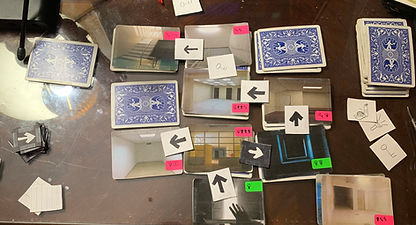

Dungeon Mapper was originally a board game based on liminal space aesthetics. Originally called Navigate Liminal, it was going to be a card based game about connecting disconnected spaces using arrows tiles, finding items, and using them for traversal. The game was primarily about getting lost in the aesthetic and letting your mind fill in the gaps.
Though the game was iterated on, the game loop wasn't satisfying. So the aesthetic was dropped in favor of keeping some of the core mechanics of the prototype.
A super simplified game using the same grid/tile based approach turned into the beginning of Dungeon Mapper. The aesthetic changed, but mapping your way from start to finish remained the same.
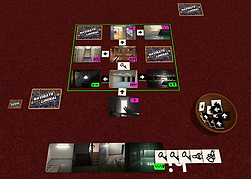


The game saw many iterations in Table Top Simulator. Slowly, complexity was added back in. I found myself automating a lot of the dealing processes just accommodate the design. Playtests with family and friends proved the simplified nature to be working.
The game was eventually put on ice, due to other projects, but the idea still kicked around in my head.

In 2024, I played UFO 50, a game focused on recapturing the retro game aesthetic in a series of 50 micro-games built off a fantasy console called the LX-III. It's appeal to retro graphics and simplicity of gameplay appealed to me as both a player and designer. I felt motivated to make a micro-game like that myself, but was stumped where to start.

Due to the simplicity of Dungeon Mapper, I challenged myself to take that game's design and port it to LX-III.


The constraints of the LX-III proved to be challenging. The fake console has a strict palette, and the controller only has 2 buttons and a D-pad (no dedicated start button on the controller either.) Concessions about the interface had to be made, but the game now had a full loop and a new coat of paint.
Ultimately, Dungeon Mapper proved how my design philosophy of iterating off of small concepts works better than starting off with something complex. The game oversaw a lot of change, but I personally am glad I gave the project the time it needed.
As of current, the game still needs original music and sound effects, but the core loop and aesthetic are pretty solidfied.